
Hungry Dragon: by Hungry Shark
Ubisoft EntertainmentArcade
4.520.61K Reviews
- Version
- 5.7
- Installs
- 10.00M
- Age Rating
- Teen
Screenshots
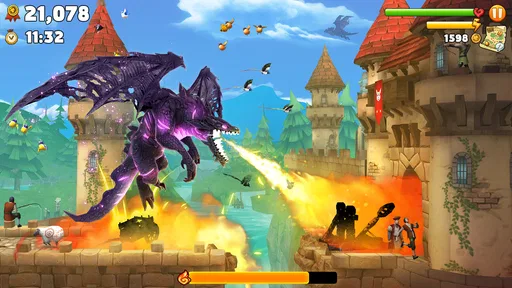
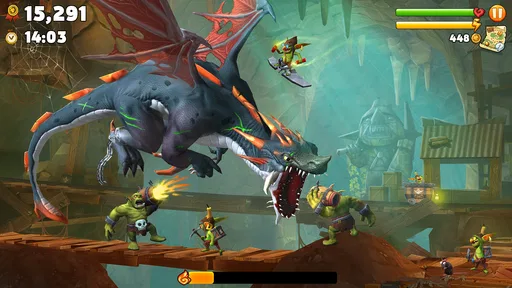

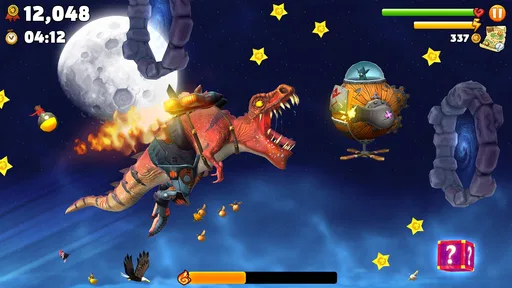
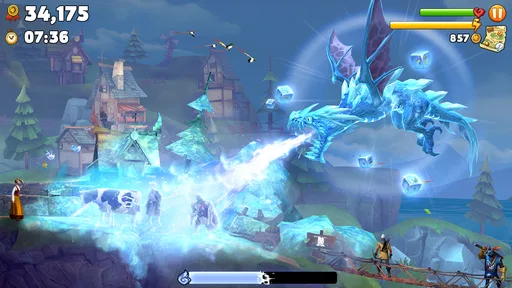
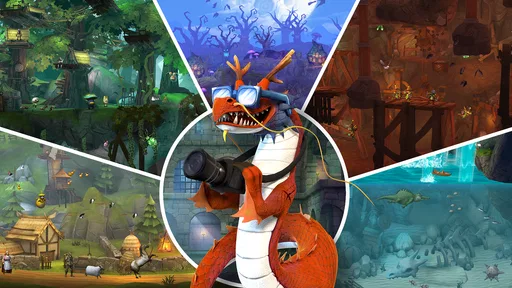
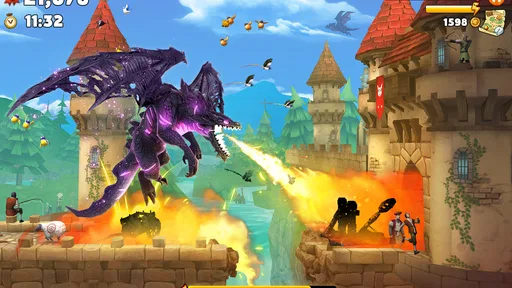
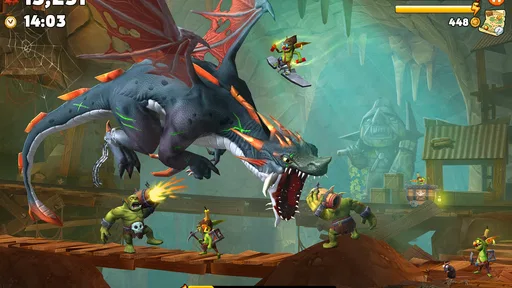
Our Review of Hungry Dragon: by Hungry Shark
 Analysis by Appyee
Hungry Dragon is the kind of arcade game I open when I want immediate action rather than a long tutorial or a complicated story. I control a dragon, dive into a lively fantasy world, and keep the run going by eating, exploring, and avoiding threats that can end the flight. That simple loop is easy to understand, but the real appeal is how it turns a short session into a constant decision about risk, movement, and survival.
Developed by Ubisoft Entertainment, this free game has built a sizeable audience, with an average rating of 4.5 from around 371 thousand ratings and more than 10 million installs. It sits in the Teen category, which feels appropriate for its energetic combat and cartoon-style fantasy violence. I found it more satisfying than a basic score-chasing game because the dragon’s size, abilities, and surroundings make each attempt feel like a small expedition rather than a single repeated tap.
Why the survival run is the real strength
The most important capability here is the endless survival structure. Instead of asking me to complete one fixed stage and stop, the game places me in a world where I can continue pushing forward as long as I keep the dragon fed and out of danger. The central skill is managing momentum without becoming careless. Eating smaller creatures and other available targets helps maintain the run, while stronger enemies and hazards force me to decide whether the next reward is worth the risk.
That design changes the feeling of an arcade session. In many similar games, the main challenge is simply reacting quickly to whatever appears in front of you. Here, I am also thinking a few seconds ahead. I may see an attractive group of targets below, but reaching them can put me near a dangerous enemy or leave me with less room to escape. The best runs are not always the most aggressive ones; they are the runs where I keep enough control to recover from a bad approach.
The dragon theme helps this loop feel natural. I am not collecting abstract points while a timer disappears. I am guiding a hungry creature through a world that rewards movement and appetite. That makes the objective instantly readable, even when the screen becomes busy. I can understand what I should do without pausing to study a complicated interface.
How the ability feels during an actual run
In practice, the game works best when I treat the map as a route rather than a corridor. I move through the environment looking for safe food, useful openings, and places where I can change direction quickly. Staying in motion is important, but blindly flying forward is not always smart. A short detour can preserve a run that would otherwise end because I entered a fight without enough space.
One useful habit is to avoid spending every moment at the edge of the screen. Keeping a little room around the dragon gives me more options when an obstacle or stronger creature appears. This is especially helpful on a phone, where my thumb can cover part of the action and quick corrections are less precise than they would be on a larger display. I also learned to watch the route ahead instead of focusing only on the nearest target. The immediate reward is tempting, but the next few seconds usually matter more.
The survival format also makes the game easy to pick up in short bursts. I can play a quick run while waiting for an appointment, then stop without needing to remember a complicated mission. If I have more time, the same structure gives me a reason to continue because I want to improve my route and see how much farther I can get. That flexibility is one of the strongest reasons I would recommend it for casual arcade players.
Progression gives the repeated runs more purpose than a completely endless score attack. As I become familiar with the controls and the dangers, I can approach the world more confidently and make better use of the dragon I am currently playing. The important point is that progression does not remove the need for judgment. A stronger dragon may make some encounters easier, but poor positioning can still waste a promising attempt.
A practical session for everyday play
Imagine having ten minutes before a train arrives. I would start a run, focus on safe targets near the opening area, and use the first moments to settle into the controls. Rather than immediately chasing the most attractive target, I would build a comfortable rhythm and learn where the route gives me room to turn. If the run ends, I can try again without feeling that the short session was wasted.
For a longer evening session, I would take a different approach. I would use early runs to test routes, notice which areas create problems, and then attempt a more ambitious push once I understood the danger pattern. This is where the game becomes more than a reflex exercise. The player is gradually building personal knowledge of the world, even though each attempt remains fast and accessible.
That also answers an important question for new players: do I need to be highly skilled before the game becomes enjoyable? In my experience, no. The opening controls and goal are approachable, and improvement arrives naturally through repetition. The challenge becomes more interesting once I stop treating every target as mandatory and start choosing when to retreat, circle around, or continue forward.
What makes it different from ordinary arcade alternatives
Compared with a traditional fixed-screen arcade game, Hungry Dragon gives me more freedom to explore. I am not only trying to survive a short sequence of enemies; I am navigating a larger-feeling environment where direction and route choice affect the result. Compared with a simple endless runner, it feels less automatic because I have more responsibility for where the dragon goes and what it attempts to consume.
It also differs from slower role-playing games. There is no need to spend a long time reading dialogue or arranging a party before I can enjoy the action. The arcade core remains visible at all times. If I want deep character planning, careful turn-based combat, or a story built around long conversations, another genre would suit me better. If I want immediate movement with enough progression to keep the loop from feeling empty, this is a stronger match.
The survival focus creates a particular kind of tension that score-based alternatives sometimes lack. A high score is satisfying, but preserving a run also feels like protecting an investment of attention. When I have built a good rhythm, a reckless choice can end more than a few seconds of play; it can end a run that was developing well. That emotional difference is small, but it is what keeps me returning.
The tradeoffs behind the free download
The game is free to download, which makes it easy to try without a financial commitment at the start. It includes in-app purchases ranging from $0.99 to $79.99 per item, so players should be aware that the wider progression experience can involve optional spending. I would approach those purchases carefully, especially if the game is being played by a younger member of the household.
The Teen content rating is another practical point to consider. The presentation is colorful and playful, but the action still revolves around attacking, eating, and surviving in a fantasy setting. I would not describe it as a quiet or educational game. It is better suited to players who are comfortable with cartoon combat and a steady stream of arcade pressure.
There is also a natural repetition in the format. The survival loop is the reason to play, but it can become familiar if I expect constant novelty. The game works best when I enjoy improving routes, handling danger more cleanly, and extending a run. Someone who needs every session to introduce a completely different type of activity may find the repetition less appealing.
Another tradeoff is the effect of failure. Short attempts are convenient, but they can also encourage “one more run” behavior. Because a promising attempt can end quickly after a mistake, I sometimes feel tempted to restart immediately instead of putting the phone down. That is not a flaw unique to this game, but its fast restart rhythm makes it worth noticing. I recommend setting a natural stopping point if I am playing during a break rather than letting the next run consume the whole break.
Performance and comfort matter as well. The action can become visually busy, and precise movement is easier when the screen is clean and my hand is not blocking the important area. I would use headphones only if I am in a suitable place, since the game’s energy is more enjoyable with sound, but it remains playable as a quick visual arcade experience when I need to keep things quiet.
Small habits that improve the experience
My first practical tip is to learn the value of retreating. In an arcade game, backing away can feel like losing progress, but here it can protect the entire run. If an encounter looks unfavorable, I would rather create distance and search for a safer route than force the attack because a target happens to be nearby.
My second tip is to use early attempts as reconnaissance. I do not need every run to be a record attempt. A failed session can still show me where I tend to lose control, which direction gives me more room, and how aggressively I can move before the dragon is exposed. This mindset reduces frustration and makes progression feel more deliberate.
My third tip is to separate hunger from impatience. The game encourages feeding the dragon, but that does not mean every visible target deserves immediate attention. I get better results when I scan for a safe chain of targets instead of lunging toward the closest one. That small pause between seeing a reward and committing to it is where much of the strategy lives.
I would also avoid judging a dragon only by its apparent power. A capable dragon is useful, but the player’s route selection still determines whether that power can be used safely. If I repeatedly fail in the same area, changing my approach is more productive than assuming I simply need a stronger option. That is an important distinction for players who are used to solving arcade difficulty only through upgrades.
Who will enjoy it most
I think Hungry Dragon is a good fit for players who like mobile arcade games with quick controls, colorful fantasy action, and a reason to replay the same world. It is especially comfortable for people who want sessions that can last a few minutes or stretch longer when the run is going well. Fans of creature-based games may also enjoy the satisfaction of controlling something powerful while still needing to respect the environment.
It is less suitable for someone looking for a calm game, a tightly scripted adventure, or a competitive experience built around precise multiplayer matches. I would also hesitate to recommend it to a player who dislikes free-to-play systems or who wants all progression to feel completely separate from optional purchases. The download is free, but the presence of item purchases means the best experience depends partly on personal spending discipline.
For parents, I would check the Teen rating and consider how the player handles repeat attempts and optional purchases. The game is easy to understand, but that accessibility can make it particularly absorbing. A simple agreement about play time and spending is sensible before handing it to a younger player.
Device requirements and long-term appeal
The current version is 5.7, and the game supports devices running Android 6.0 or later. That makes it available to a broad range of Android users, although the actual comfort of play will still depend on the phone’s screen, controls, and general performance. I would keep the device charged before a longer session because the fast movement and animated action are more enjoyable when I am not rushing to finish.
Its long-term appeal comes from mastery rather than from a single surprise. I return because I can make a cleaner choice than I did last time, survive a section that previously stopped me, or find a more confident rhythm through the world. That is a modest goal, but it is exactly the kind of goal that works well on mobile. I do not need to remember a complex plot to feel progress.
After spending time with it, I see the game’s greatest strength as the way its survival capability turns movement into judgment. Eating keeps the action moving, but it is the decisions around eating that create the tension. The game rewards players who can balance appetite with caution, and that balance gives the arcade format more depth than its bright presentation initially suggests.
My recommendation is straightforward: try it if you want a free, energetic arcade game that works well in short sessions and gives you a reason to replay each attempt. Go in knowing that repetition, optional purchases, and the Teen-rated fantasy action are part of the package. Hungry Dragon is at its best when you treat every run as a route-planning challenge, not just a race toward the nearest target. For me, that is what makes it worth keeping installed.
Verdict
Strengths of Hungry Dragon: by Hungry Shark
- Fast, chaotic flying gameplay is easy to learn but remains satisfying.
- Many dragons offer distinct abilities, sizes, and play styles to experiment with.
- Short missions fit well into quick gaming sessions.
- The colorful fantasy world is packed with hidden areas and collectibles.
- Offline play makes it convenient when you have no internet connection.
Limitations of Hungry Dragon: by Hungry Shark
- Energy limits can interrupt longer play sessions.
- Upgrading and unlocking dragons may require considerable grinding.
- Frequent missions and rewards can make progression feel repetitive.
- Touch controls may feel imprecise during crowded combat sequences.
- The game can consume significant battery during extended sessions.
Other Releases by Ubisoft Entertainment
View All
Hungry Shark Evolution
Arcade4.5

Hungry Shark World
Arcade4.7

Just Dance Now
Music3.8

Just Dance 2016-22 Controller
Music3.5
Similar Picks in This Category
View All
Subway Surfers
SYBO Games4.6

Stickman Party 234 MiniGames
PlayMax Game Studio4.6

Subway Princess Runner
Ivy4.4

Temple Run
Imangi Studios4.2

Zombie Tsunami
Mobigame SAS4.6

Stack Ball - Crash Platforms
CASUAL AZUR GAMES4.5
Frequently Asked Questions
What is Hungry Dragon, and how does the gameplay work?
Hungry Dragon is an arcade action game from the creators of Hungry Shark. You control a flying dragon, explore a fantasy kingdom, and eat creatures, villagers, and enemies to earn points and grow stronger. Gameplay is fast and accessible, combining free movement, missions, collectible items, timed events, and combat. Each run encourages you to explore further while avoiding hazards and powerful opponents.
Is Hungry Dragon free to download and play?
Yes, Hungry Dragon can be downloaded and played for free on supported Android and iOS devices. However, it includes optional in-app purchases for items such as gems, bundles, costumes, and other upgrades. The game can be enjoyed without spending money, although progress may feel slower and some rewards or convenience features are easier to obtain through purchases. Parents should review purchase settings before allowing children to play.
Does Hungry Dragon require an internet connection?
Hungry Dragon may allow some core gameplay to work offline, but an internet connection is recommended for the complete experience. Online access can be needed for advertisements, cloud-related features, special events, updates, rewards, and in-app purchases. Availability may vary depending on the device and game version. If you plan to play while traveling, it is best to test the game offline beforehand rather than assuming every feature will work.
Are there many dragons to unlock, and can they be customized?
A major part of Hungry Dragon is collecting and upgrading different dragons. Each dragon has its own size, abilities, statistics, and gameplay style, so unlocking a stronger creature changes how you explore the map and defeat enemies. You can also equip pets, costumes, and other items that provide useful bonuses or alter the appearance of your dragon. Progression is designed to reward regular play and exploration.
Is Hungry Dragon suitable for children, and does it contain violence?
Hungry Dragon has colorful cartoon graphics and simple controls, but its gameplay is built around eating characters and battling enemies. The presentation is exaggerated and fantasy-based rather than realistic, although some parents may still consider the feeding and combat themes unsuitable for younger children. The game can also include advertisements and optional purchases. Check the age rating in your region and use parental controls if needed.
Play our best games!


